The Texas All-Lines Adjuster License: Exam, Course or Designated Home State?
Three ways to a Texas all-lines adjuster license: the $49 Pearson VUE exam, an approved course, or the DHS license for non-licensing states. Costs, traps.
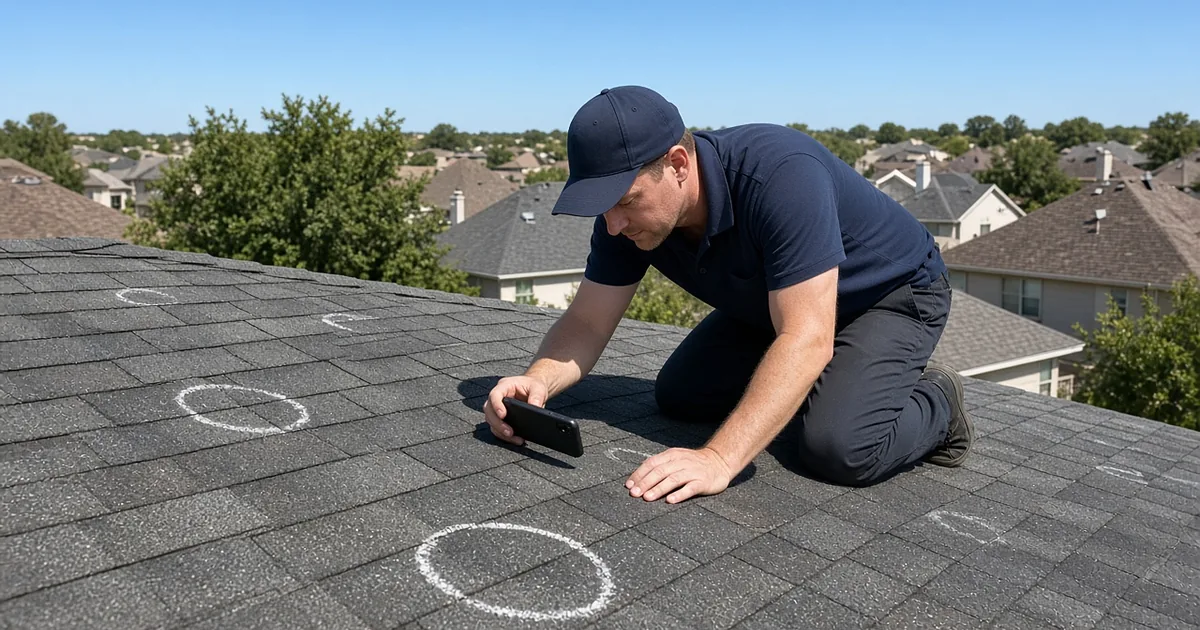
The Texas all-lines license is the one many new adjusters chase first, including plenty who will never live in Texas. Every storm season they hear three different stories about how to get it. All three are true, for different people.
Three routes to the same license
| Route | Exam? | Main cost | Best for |
|---|---|---|---|
| Pass the Pearson VUE exam | Yes, InsTX-ALAdj16 | $49 exam fee | Self-studiers on a budget |
| TDI-approved adjuster course completed within the last 12 months | No | Course tuition, set by the provider | People who want structure, or whose employer pays |
| CPCU or AIC (Associate in Claims) designation | No | Already paid | Experienced insurance professionals |
There's also a fourth case: a Texas adjuster license that's been expired more than 90 days but less than a year can be reinstated without an exam: you file a new application and pay the license fee plus half again as a late fee. Expired under 90 days, you can still renew, with a late fee of half the renewal fee.
All routes end in the same place: fingerprints, then a $50 application on Sircon.
Which route fits you
- You learn well from books and practice tests: take the exam. At $49 it's the cheapest route by a wide margin, and Pearson VUE lets you rebook the next day if you fail.
- You want a course anyway, or a carrier or IA firm is paying: take a TDI-approved course and skip Pearson VUE entirely. Find approved courses through a Sircon account. Apply within 12 months of finishing.
- You hold CPCU or AIC: apply directly.
Our view: unless someone else is paying, the exam route gives the same license for the price of a tank of gas. Courses earn their keep for people who know they won't study alone.
The exam: what's on it
| InsTX-ALAdj16 (English) | |
|---|---|
| Scored questions | 150 |
| Time | 150 minutes |
| Passing score | Scaled 70 |
| Exam fee | $49, paid when you book; no payment at the test center |
| Spanish version | InsTX-ALAdj36, same time and fee |
| Retake | Rebook as soon as one day later, no limit on attempts |
From the Pearson VUE content outline, the 150 questions break down as:
| Section | Share | Roughly |
|---|---|---|
| General property and casualty product knowledge for adjusters | 40% | 60 questions |
| Insurance terms and related concepts | 40% | 60 questions |
| Texas statutes and rules | 20% | 30 questions |
A minute per question is tight for policy-language questions, so practice with a timer.
About that 70. It's a scaled score, not a percentage. Pearson VUE's handbook says scaled scores run from 0 to 100 and that 70 isn't the number or percentage of questions you got right. Different forms of the exam are equated so a pass means the same level of knowledge on each.
Start with our Texas all-lines adjuster practice test, then the full-length adjuster practice exams. The two 40% sections, general P&C product knowledge and insurance terms, carry the most weight. For topic drills, use our property loss adjusting and claims investigation and settlement standards study sets. The Texas fifth is in Texas insurance law for the adjuster exam. Terms you don't recognize are in the insurance glossary.
The designated home state license, and who can't have it
If you live outside Texas, you'd normally get a resident adjuster license in your home state and then a Texas nonresident license. That doesn't work if your state doesn't license adjusters. For those people, Texas offers the designated home state (DHS) all-lines adjuster license: it's the special nonresident license for residents of non-licensing states.
TDI is blunt about the rule: "Only residents of states that don't license adjusters can apply for this license. If your state offers a resident adjuster license, you are not eligible... Your application will be declined, and your application fees will not be refunded."
DHS uses the same exam, the same course and designation exemptions, the same $49 and $50 fees and the same IdentoGO fingerprints. Two differences:
- No emergency license. A resident all-lines adjuster can get TDI's 90-day emergency license; a DHS adjuster can't. Neither license comes as a temporary license or provisional permit.
- Eligibility is checked. Before you pay, confirm on your own state's insurance department site that it doesn't issue a resident adjuster license.
Costs, start to finish
| Item | Exam route | Course route |
|---|---|---|
| Pearson VUE exam | $49 | none |
| Approved course | none | Provider's tuition |
| Fingerprints (IdentoGO) | IdentoGO's fee | IdentoGO's fee |
| License application (Sircon) | $50 | $50 |
| Exam and application fees, before fingerprints | $99 | $50 plus tuition |
Veterans can be reimbursed for Texas exam fees on exams taken on or after February 1, 2019, according to TDI. A retake costs another $49.
Once licensed, the license runs two years, and most Texas licenses need 24 hours of continuing education each two-year period.
The order that avoids paying twice
- Pass the exam (or finish the approved course).
- Start the application on TDI's online fingerprint portal to get your IdentoGO service code, then get fingerprinted. Skip this step if you already hold an active TDI license and have fingerprinted before.
- Apply on Sircon and pay $50.
TDI says that if you apply before passing the exam, you must submit a new application after you pass and pay the fee again. And you must fingerprint and apply within one year of passing, or retake the exam.
Mistakes we see
- Applying "to get in the queue" before passing. It costs a second $50.
- Applying for DHS from a state that licenses adjusters. Declined, no refund.
- Reading a 68 as "two questions short." Scores are scaled; it doesn't map to questions.
- Letting the 12-month window lapse after a pass or a course.
- Ignoring the Texas section. It's 20% of the exam, about 30 questions on statutes and rules.
More on second attempts: Texas retake rules in detail.
What to do next
- Pick your route from the table.
- If testing, practice until you're well clear of passing, then book InsTX-ALAdj16 on Pearson VUE.
- After passing: fingerprint portal, IdentoGO, Sircon.
We keep the official Texas sources we use on one page.
Frequently asked questions
How we checked this
We read TDI's adjuster pages and the Pearson VUE Texas Insurance Candidate Handbook and content outlines on November 15, 2026.
- TDI, Adjuster: all lines (apply for a license)tdi.texas.gov
- TDI, Adjuster: designated home state, all linestdi.texas.gov
- Pearson VUE, Texas Department of Insurance examspearsonvue.com
- Texas Insurance Code, chapter 4101 (adjusters)statutes.capitol.texas.gov
Ready to practice?
Timed practice exams built from your state's insurance law, with a readiness score that shows when you are ready to book.
Start the Texas adjuster practice testEvery answer cites the law it comes from
More guides

How to Get Your Insurance License: The Steps, the Costs and the Clocks (Texas and Florida)
How to get an insurance license, step by step, using real Texas and Florida rules: courses, the exam, fingerprints, the $50 fee, timing and appointments.

How Hard Is the Texas Insurance Exam? What the Pass Rates and the Rules Say
About 57% of first-time takers passed the English-language Texas Life & Health exam in 2025. Format, the 70 scaled score, fees, retakes and how to prepare.

Failed the Insurance Exam? Retake Rules, Costs and a Better Second Attempt (Texas and Florida)
Failed your insurance exam? Texas and Florida retake rules: wait times, attempt limits, fees, score reports, Florida's free exam review and a better plan.